Slopes That Stay in Place Year-Round
Erosion Control in Batesburg for properties experiencing soil loss, landscape washout, or slope instability
Properties across Batesburg with sloped terrain or poor drainage often face visible soil displacement after each heavy rain, leaving exposed roots, rutted beds, and damaged turf where topsoil once provided coverage. Terramark Environmental LLC delivers erosion control solutions designed to stabilize soil and protect landscapes from the runoff patterns common to central South Carolina's clay-heavy soils and seasonal storm activity. Effective erosion control stops the cycle of washout and repair by addressing the underlying movement of water and soil across your property.
The service involves evaluating slope angles, water flow paths, and soil composition to determine which combination of retaining walls, grading adjustments, and drainage infrastructure will hold soil in place during storm events. Each solution is built around your property's specific topography and the volume of runoff it receives.
Schedule a property evaluation to identify specific erosion patterns and the most effective stabilization approach for your landscape.
What Proper Erosion Control Requires
Controlling erosion means redirecting water before it gains enough velocity to move soil, which often requires installing French drains or swales at the top of slopes to intercept runoff, coupled with grading that spreads water flow across wider areas rather than concentrating it into channels. When slopes exceed certain angles or runoff volume is high, retaining walls provide the structural support needed to prevent mass soil movement while creating level planting zones.
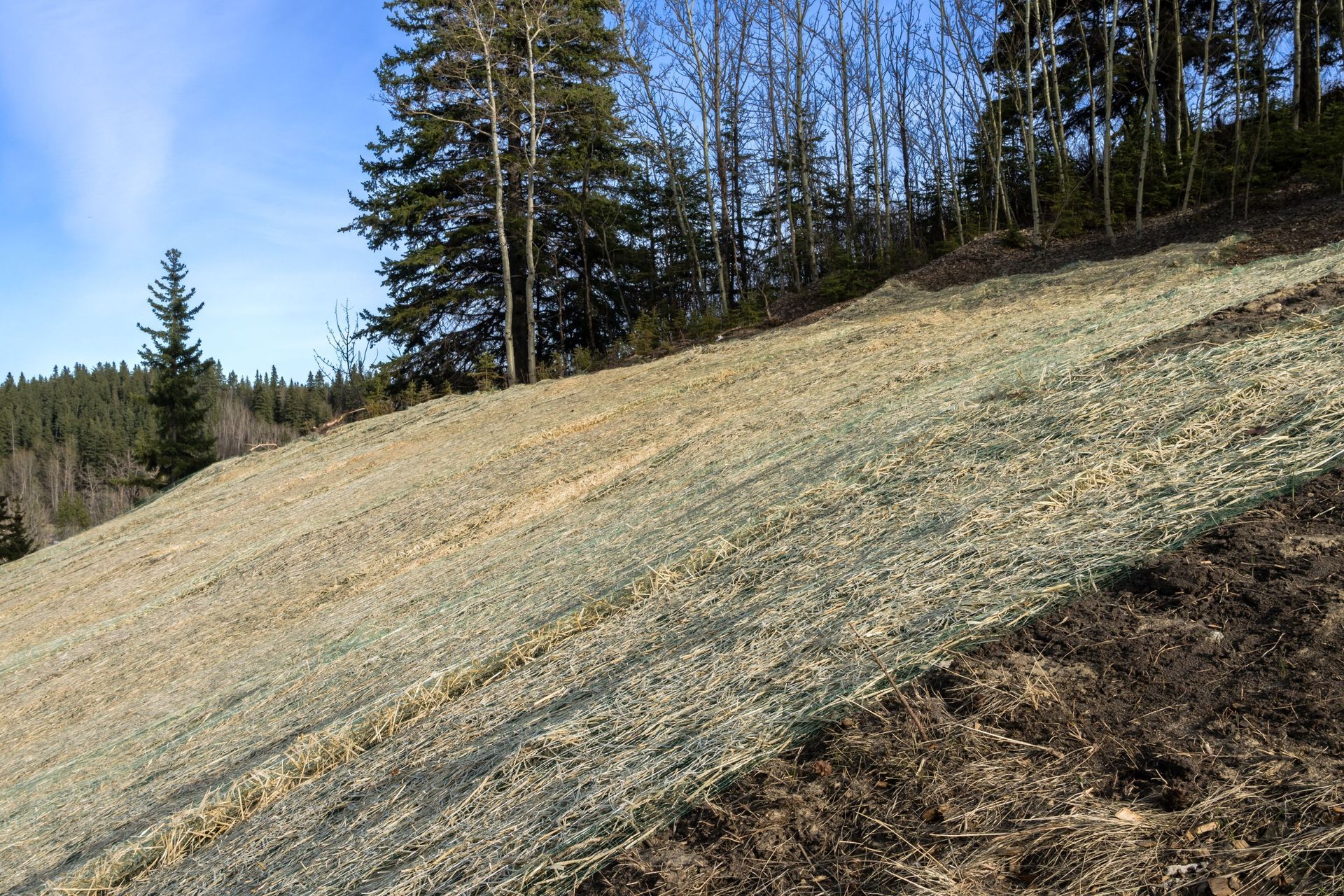
Once erosion control infrastructure is in place, you'll notice that storms no longer leave behind exposed gullies or piles of displaced mulch at the base of slopes. Turf and planting beds remain intact through wet seasons, and hardscapes like patios or walkways no longer develop undermining or settlement issues caused by soil washing away beneath them.
Erosion control often integrates with broader landscape improvements, meaning the work may include regrading areas for better drainage, establishing permanent vegetation to anchor soil with root systems, or adding permeable hardscaping that allows water to infiltrate rather than run off. The approach varies based on whether the priority is protecting existing features, preparing land for new installation, or preventing further damage to foundations and structures.
Understanding how erosion control works and what it involves helps property owners make informed decisions about protecting their land and reducing long-term maintenance costs.
What Property Owners Usually Ask
What causes erosion to worsen over time?
Erosion accelerates when water repeatedly follows the same path down a slope, cutting deeper channels with each rain event and removing more soil as the grade steepens. Early intervention prevents this feedback loop from creating large-scale landscape damage.
How does erosion control integrate with drainage systems?
Erosion control and drainage work together by managing where water flows and how quickly it moves across your property. French drains and dry wells capture runoff at the top of slopes, while grading and ground cover slow water velocity across the surface, reducing its ability to displace soil.
When is a retaining wall necessary for erosion control?
Retaining walls become necessary when slopes exceed angles that soil and vegetation alone can stabilize, or when you need to create level areas for functional use while preventing soil from sliding downhill. They provide permanent structural support that grading and drainage alone cannot achieve.
What should I expect during the installation process?
Installation typically begins with site preparation and grading to establish proper drainage paths, followed by excavation and installation of subsurface drainage components if needed, then construction of retaining walls or placement of erosion control materials. Properties in Batesburg often require attention to clay soil compaction and runoff volume during design.
How long does erosion control last once installed?
Properly designed erosion control systems function indefinitely as long as drainage components remain clear and vegetation establishes root systems that reinforce soil stability. The infrastructure itself requires minimal maintenance beyond periodic inspection of drainage outlets and removal of debris that could obstruct water flow.
Terramark Environmental LLC handles erosion control projects with attention to both immediate stabilization needs and long-term landscape performance. Request a consultation to review your property's slope and drainage conditions and discuss a tailored erosion control plan.