
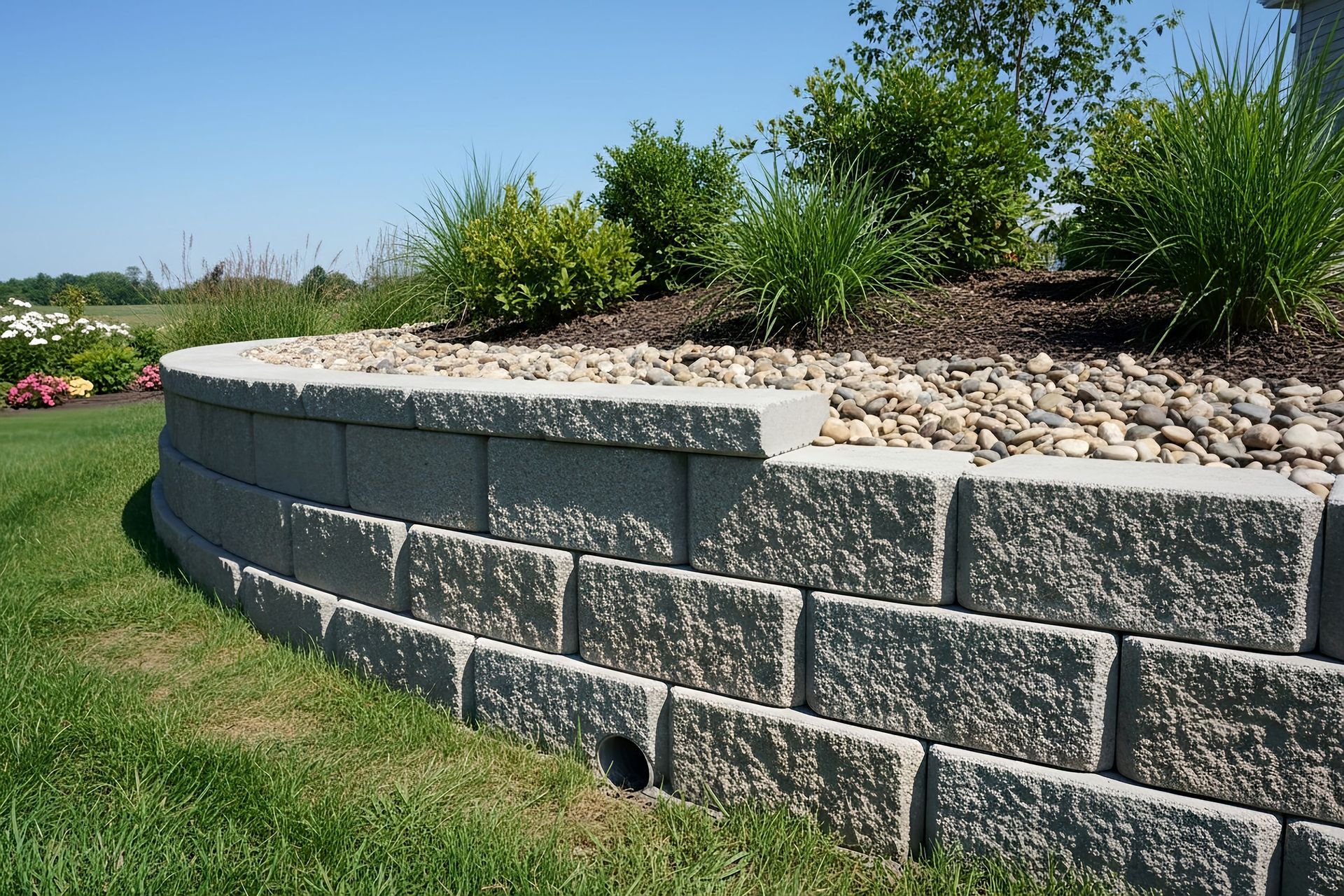
Slopes Stabilized to Create Usable Space
Retaining Wall Installation in Batesburg for properties with erosion concerns, unstable slopes, or wasted yard areas
Properties with sloped yards often lose topsoil during heavy rain, develop gullies that worsen over time, and offer limited usable space for landscaping or outdoor activities. Retaining walls address these problems by holding soil in place, creating level terraces, and establishing stable planting areas where slopes previously made installation impossible. Terramark Environmental LLC builds retaining walls across Batesburg as part of landscape improvement projects, working with homeowners who need both structural support and visual appeal from the same installation.
The installation process involves excavating the slope to create a stable base, compacting foundation material to prevent settling, and stacking wall blocks or pavers in staggered courses that interlock for strength. Drainage is integrated behind the wall using gravel backfill and perforated pipe, which prevents water pressure from building up and pushing the wall forward over time.
Schedule a site visit to review slope conditions, discuss wall height requirements, and determine whether additional grading or drainage work is needed before construction begins.
What Retaining Walls Actually Prevent
Retaining walls stop soil from washing downhill during storms, which eliminates the gullies and exposed roots that develop when slopes erode unchecked. The wall creates a level surface above and below, turning unusable slope into functional planting beds, patios, or lawn areas that can support landscape features and regular use. Proper drainage behind the wall ensures water moves through the backfill material rather than pooling, which protects the wall structure and prevents hydrostatic pressure from causing failure.
After installation, you'll notice soil that stays in place during heavy rain, stable planting areas that don't shift or settle, and defined levels that make the property easier to navigate and maintain. The wall holds its position without leaning or bowing, and weep holes or drainage gaps allow water to exit the backfill area without staining or eroding the front face. Retaining walls integrate cleanly with paver patios, landscape installations, and other hardscape features, creating a unified design that adds both function and visual appeal.
Walls are built with durability and clean design as priorities, using materials selected for their strength and appearance. The crew handles both the structural installation and the grading adjustments needed to tie the wall into the surrounding property, which ensures the finished project looks intentional rather than added as an afterthought.
Questions about retaining walls typically focus on height limits, drainage, and how the wall connects to other landscape features.
What Homeowners Need to Know
What determines the height of a retaining wall?
Wall height is determined by the slope being retained, the amount of level space needed, and structural limitations of the materials used. Walls taller than four feet often require engineered designs and reinforcement methods beyond standard block or paver construction.
How is drainage managed behind a retaining wall?
Drainage is managed using gravel backfill that allows water to flow downward, along with perforated pipe that collects water and directs it away from the wall base. Without proper drainage, water pressure builds behind the wall and causes it to lean, crack, or fail completely.
Can retaining walls be built on any type of soil?
Walls perform best on stable soil that compacts well and doesn't shift excessively. Properties with loose sand, expansive clay, or high water tables may require additional foundation work or alternative wall designs to achieve long-term stability.
What maintenance do retaining walls require after installation?
Walls require periodic inspection to ensure drainage outlets remain clear and backfill hasn't settled excessively. Joints between blocks should be checked for shifting, and any vegetation growing in or behind the wall should be removed to prevent root damage.
How do retaining walls integrate with landscape installations in Batesburg?
Walls create level planting beds where slopes previously prevented installation, and they tie into paver patios, walkways, and other hardscape features to form a complete outdoor design. Terramark Environmental LLC coordinates wall placement with drainage solutions and grading adjustments to ensure all elements work together.
Terramark Environmental LLC installs retaining walls for residential properties throughout Batesburg, with integrated drainage and grading handled by the same experienced crew. Reach out at (803) 580-9813 to arrange a property evaluation, discuss design options, and receive a detailed project estimate based on your slope conditions and functional goals.